It is that time of year when concert seasons are winding down, and we take a bit of time to get ready for summer activities. May was one of the most exhilarating months I could have ever imagined, and not all the events were about conducting.
The last two weeks of the very long European tour finally arrived. In Las Palmas, Gran Canaria, I was not quite sure what to expect with a truly difficult program. Since we had six rehearsals, Music Director Karel Mark Chichon and I had decided to really challenge the orchestra.
Le Sacre du printemps has always been in my repertoire. As students, we conductors all considered this to be the technical, musical mountain to climb, given its many traps. These days, it has become such a standard work that even some high school orchestras are tackling it. However, getting to the heart of the music can be difficult because of its rhythmic challenges.
It is important to remember that this piece, now more than 110 years old, is a ballet. Imagine what the dancers at the premiere had to do, much less the orchestra. Keeping dance in mind, I find it helpful to tell the orchestra that much of the piece is really a distorted waltz.
The first surprise with the Canarians came at the outset. The Rite starts with a languorous bassoon solo played in the upper register. There is a fermata on the high C, usually held for a couple of seconds. The principal bassoonist in Las Palmas not only elongated this but also started at a whisper and then took something like seven seconds before continuing. I was stunned. It was the most sensuous realization of this treacherous opening I have ever heard.
The orchestra read through the piece with incredible facility, and I knew that this collaboration was going to be special. From other soloists, such as English horn and alto flute, came haunting moments. The orchestra not only nailed the complexity but also gave the work clarity, defining the textural elements in a way I had not experienced before. Mostly, they captured the raw energy and savagery of what it might have felt like at the premiere. It was as if we were performing the piece for the first time, but with the wealth of experience that had accumulated over the years.
When I extended the silence just before the whooshes up and landing of the final notes, my only reaction was to mouth to the orchestra, “YES!” You know the musicians are happy when they do not rush off the stage but instead stay to enjoy each other’s company and revel in the satisfaction of a job well done.
Not that the first half was bad, either. My Schubertiade came off well, and so far, there has not been a weak performance of the piece. I will play it a couple more times and then see if other conductors want to take it up.
The Appalachian Spring Suite has become a go-to piece for me when introducing American repertoire to an orchestra that does not often play this kind of music. With marvelous attention to detail and style, the orchestra performed it beautifully, particularly the moving final section.
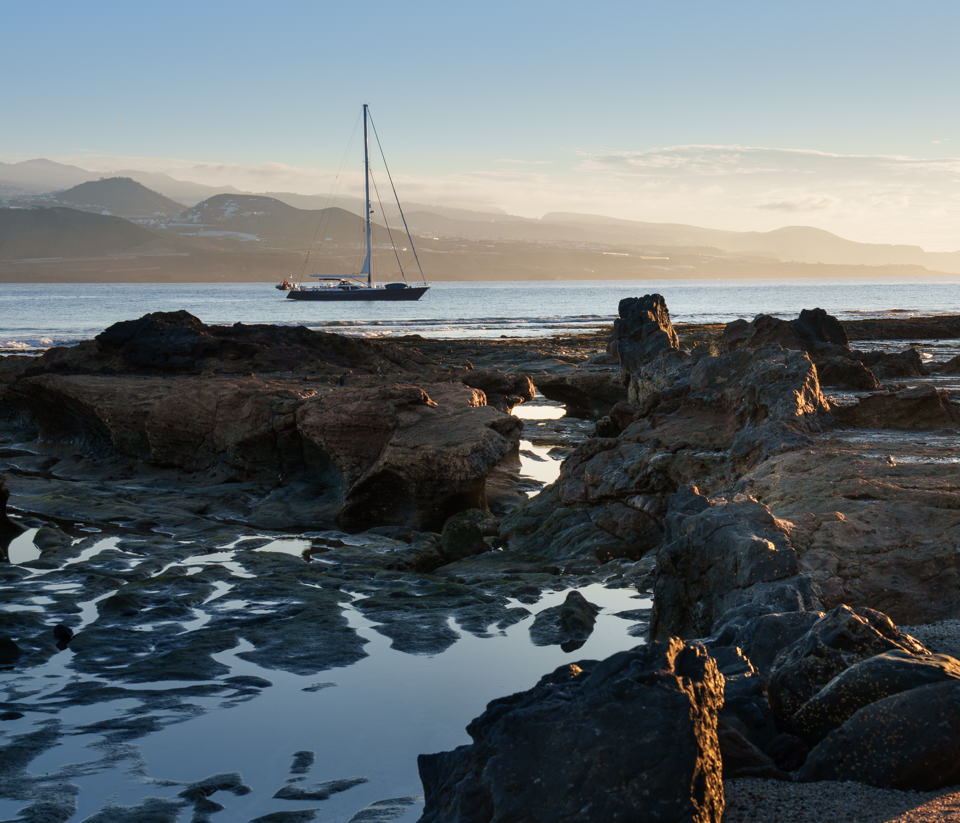
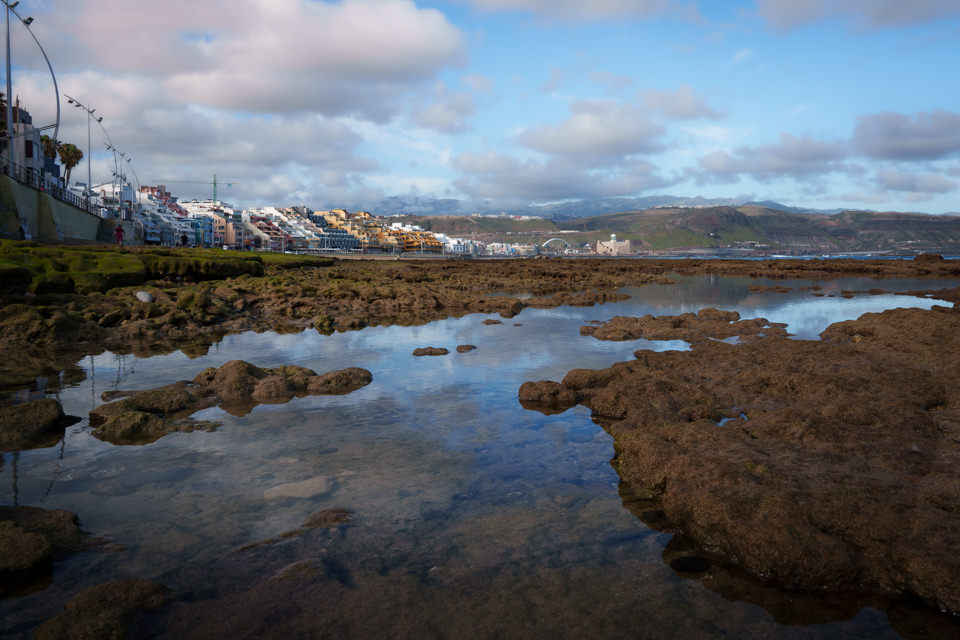
I am very happy to be conducting two weeks in Las Palmas next season. This is a wonderful place to spend time, even away from music. Cindy and I had four days off after the concert. She went out for photo shoots, and I just enjoyed the beautiful weather, wine, and food.
 ***
***
Lastly, we stopped in Berlin. Much to everyone’s surprise, this was my first concert appearance with the Rundfunk Sinfonieorchester, the radio orchestra from the former East Berlin. It turned out that I had actually worked with them back in 1985, before the wall came down. We recorded an album for Phillips of extracts from Porgy and Bess. Roberta Alexander and Simon Estes were the soloists. Imagine trying to get an East German men’s chorus to sing in stylized English back in those days. “Seben komm Eleben” can be heard in the opening scene.
For this debut, the administration specifically asked for Copland’s Third Symphony. Even as recently as 20 years ago, I probably would have proposed an alternate idea, but these days, most brass sections can handle it.
Clearly an all-American program was called for, but I wanted to do something a bit different. Instead of the usual Candide Overture opener, we played the Three Dances from On the Town. The contrasting piece would normally be Barber’s Adagio for Strings, but instead, we did Cindy’s piece by the same name. Barber appeared with his Toccata Festiva, featuring organ virtuoso Cameron Carpenter, who lives in Berlin. This is such a wonderful piece, and with the fine instrument at the Philharmonie, we gave this a rip-roaring performance.
Cindy’s Adagio was really the highlight of the program. I have performed it often, but in the glowing acoustic of the hall, I could linger over phrases in new ways. The hushed silence of the audience created the perfect atmosphere, and many were in tears. Although I have programmed this piece for future performances, I doubt that they will be as moving as on this particular occasion.
As for the Copland, it went well, notwithstanding a couple of hiccups along the way—a rhythm that did not quite line up or a brass lick that did not hit the mark. Still, the energy was palpable, and the audience seemed to enjoy the adventure of the entire evening.
Finally, Cindy and I returned home. Just 24 hours later, I was on another plane, this time to Cleveland to give the commencement address and receive an honorary doctorate from the Cleveland Institute of Music. The school has gone through some tough times in recent years, but none of this was present during my visit. It was nice to catch up with some administrators and musicians whom I had not seen in a while.
Another award, this one in the nation’s capital, came a week later. Ford’s Theatre presents the Lincoln Medal annually. Its past recipients have included Desmond Tutu, Oprah Winfrey, Hillary Clinton, George Lucas, and Peyton Manning, to name but a few.
According to the theatre’s website, “The Medal is awarded to a person (or persons) who, through his or her body of work, accomplishments or personal attributes, exemplifies the lasting legacy and mettle of character embodied by the most beloved president in our nation’s history, President Abraham Lincoln.”
The director of the Ford Theater, Paul Tetreault, wrote this:
This year, we are proud to honor two remarkable leaders whose contributions span the arts and public service. Leonard Slatkin has shaped the sound of American music for generations, while Gary Sinise has used his platform over the last 40+ years to uplift and serve those who have sacrificed for our country, including establishing the Gary Sinise Foundation in 2011 as an amplification of those efforts to support our nation’s heroes. Together, they embody a commitment to excellence, compassion, and civic responsibility that reflects the very best of the American spirit.
Since the various events surrounding this ceremony take place during the final two days of the month, I cannot recap everything here, but I can share my remarks made at the gala on the 31st of May:
I am truly humbled by this award. Let me thank the Board of Trustees for bestowing it. It is also wonderful to have my wife, son, and his wife here, as well as friends who made my twelve years in Washington so memorable.
When I was first informed of this tremendous honor, I began wondering what, if anything, I could possibly have in common with the man from Kentucky. Was there something in his background that might have shown a grounding in the fine arts, for example? Is my job as a leader of orchestras similar to anything he experienced as a leader of millions? Do I look good in a hat?
The answer to two of the questions is yes.
I needed to do a little digging to learn about Lincoln’s relationship with the arts. During my research, and much to my surprise, I found out that Lincoln, who had no prior experience with opera, attended 30 productions during his presidency, including several at this very facility. That might be more operas than some of you have witnessed during your entire lifetimes.
It would not have been a hard stretch for Lincoln, as a devotee of the theater, to appreciate the marriage of story and music. Opera companies flourished in Charleston, New York, New Orleans, and Philadelphia, as well as here in Washington, D.C., with a couple of them dating back almost one hundred years before the president’s death.
Among the operas Lincoln attended were Donizetti’s Daughter of the Regiment, Mozart’s Magic Flute, Fidelio by Beethoven, and the American premiere of Verdi’s A Masked Ball. His favorite work was the mostly forgotten Martha by the German Friedrich von Flotow. The Soldier’s Chorus from Gounod’s Faust was Lincoln’s favorite operatic excerpt.
He was an avid reader and theatergoer, but apparently somewhat tone-deaf. His singing voice was described as “shrill, shrieking, and unpleasant.” It didn’t matter. His passion far outweighed any negative reactions from others.
What was it about the arts that so captured the president’s attention? Lincoln believed that the arts revealed deep, enduring truths, and that the unity he so strived for existed in drama, poetry, sculpture, and music. He also understood the necessity for works of the human spirit to take us out of the travails of the world, as expressed in this widely repeated reminiscence: “If I could not get momentary respite from the crushing burden I am constantly carrying, my heart would break.”
No other politician has had so many pieces of music written about him or her. With songs, patriotic marches, his own words set to music, and an outpouring of works written following his assassination, more than one thousand composers have chosen him as the shining example for their expression of admiration. Even today, musical works continue to be written, guided by the inspiration that was Lincoln.
As performers of music, how can we best embody Lincoln’s spirit?
These days, when I reach the end of the rehearsal period before a performance, I speak to each orchestra, no matter what country I am in. Yesterday morning, I spoke to the National Symphony Orchestra during their dress rehearsal at the Kennedy Center. Perhaps my words serve as both a reminder and a message of hope.
Here is what I said:
“Your hard work is over. Tonight, you come onto the stage and reach people’s hearts and souls. They are taken away from whatever turmoil is occurring outside the hall’s confines and are transported to special places, usually created long ago. The audience can let its imagination run wild.
It is an honor and a blessing to be a musician, and we must always remember what brought us to music in the first place. Whether performing, teaching, viewing, or listening, we cannot let great art be destroyed. We are among the few who are the purveyors of this magical material, across all music genres.”
Perhaps another DC resident summed it up best. When Edward Kennedy Ellington was asked about music, he remarked, “There are only two kinds of music: good music and the other stuff.”
I would like to believe that Duke Ellington and President Lincoln might have become good friends.
May I wish all of you only good music in your lives.
Thank you.
I will have much more to tell you about the event and, in particular, my visit to the Kennedy Center, in an essay I will post soon.
See you next month,
Leonard