Seven countries, seven languages, and ten cities. This nine-week European concert tour has been both exhausting and exhilarating.
April came right in the middle of the trip. With Glasgow up first, I was going to see an orchestra I first conducted in 1975. It was an all-French affair with the concertmaster Michael Davis playing Chausson and Ravel. Michael served in the same position when I was Chief Conductor of the BBC Symphony in London.
Even though I was in Scotland for ten days, I only performed in one concert. It took place in Inverness, a three-hour-plus train ride from Glasgow. The occasion was the fiftieth anniversary of their concert hall. As with my debut with the orchestra, then called the Scottish National (not yet Royal), the concertmaster was again the soloist in the very same piece, Tzigane. Igor Yuzefovich was spectacular in this finger- and bow-busting romp.
Also on the program was Tchaikovsky’s Fifth Symphony. We did not have much rehearsal time, but it was clear early on that the orchestra and I were on the same frequency. So, instead of spending a lot of time on the tiny details, I outlined the broader picture. At the dress rehearsal, we just played through a few spots to get used to the very dry acoustics. As is sometimes the case, less is better. The performance was easily one of the best I have ever led of this piece, and the smiles on the faces of the orchestra members told the whole story.
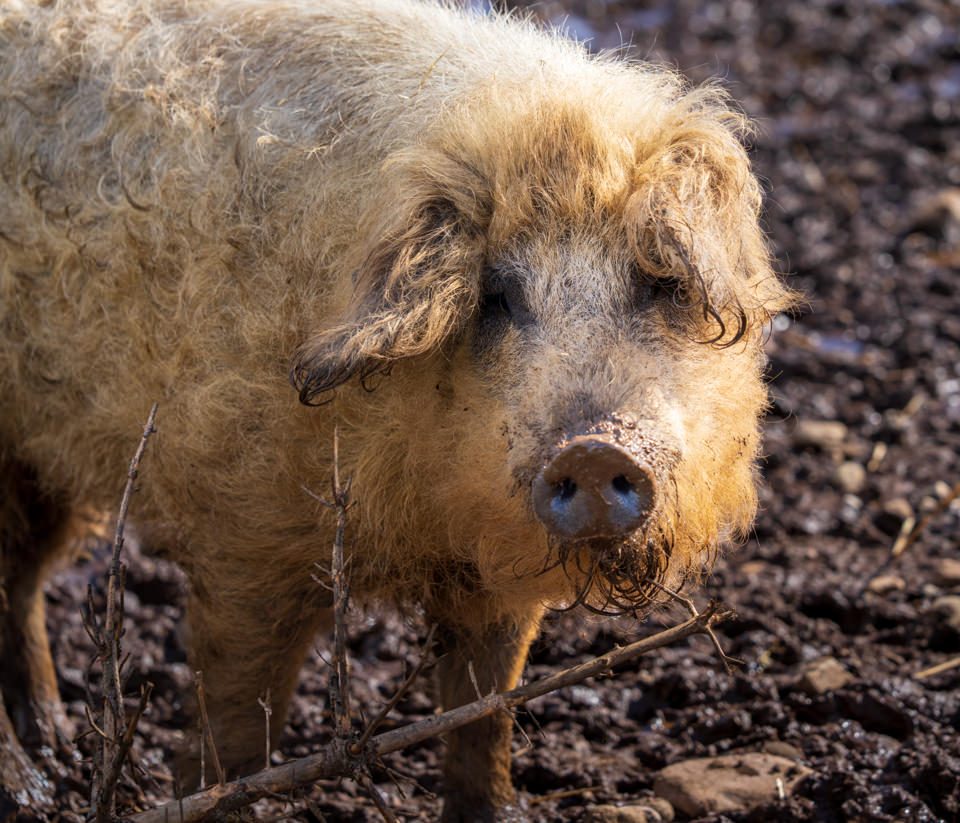
Cindy and I stayed on for the Easter holiday and visited a farm that housed some of the local fauna.
 ***
*** ***
***
The following week, we did a very intense, four-day set of recording sessions. Right next to the old concert hall, the orchestra has a spanking new facility designed for rehearsals and studio recordings. They are one of the few ensembles that can boast this, and it helps them offer their services for a bit less money than other groups can.
Once again, the rapport between the orchestra and me was wonderful. Everything went smoothly, and there was lots of good cheer. Although the weather was somewhat dreary, the atmosphere of the week made up for any clouds and rain outside.
If you are wondering, during this time of social, cultural, and political unrest, Cindy and I tell people that we are from Canada.
During this visit to the Highlands, Ford’s Theatre in Washington, D.C. announced that I will receive the Lincoln Medal at the end of May. I am deeply touched by this honor. Actor Gary Sinise is also being awarded the medal. His humanitarian work, especially his initiatives for injured soldiers, is incredible.
Past recipients have included Doris Kearns Goodwin, Maya Angelou, Desmond Tutu, Colin Powell, and Peyton Manning.
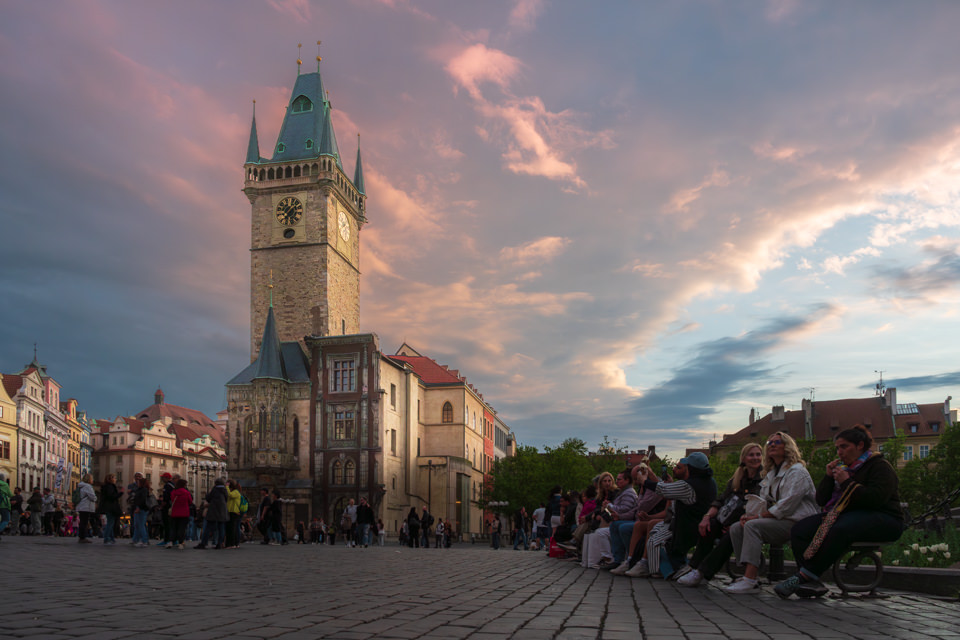
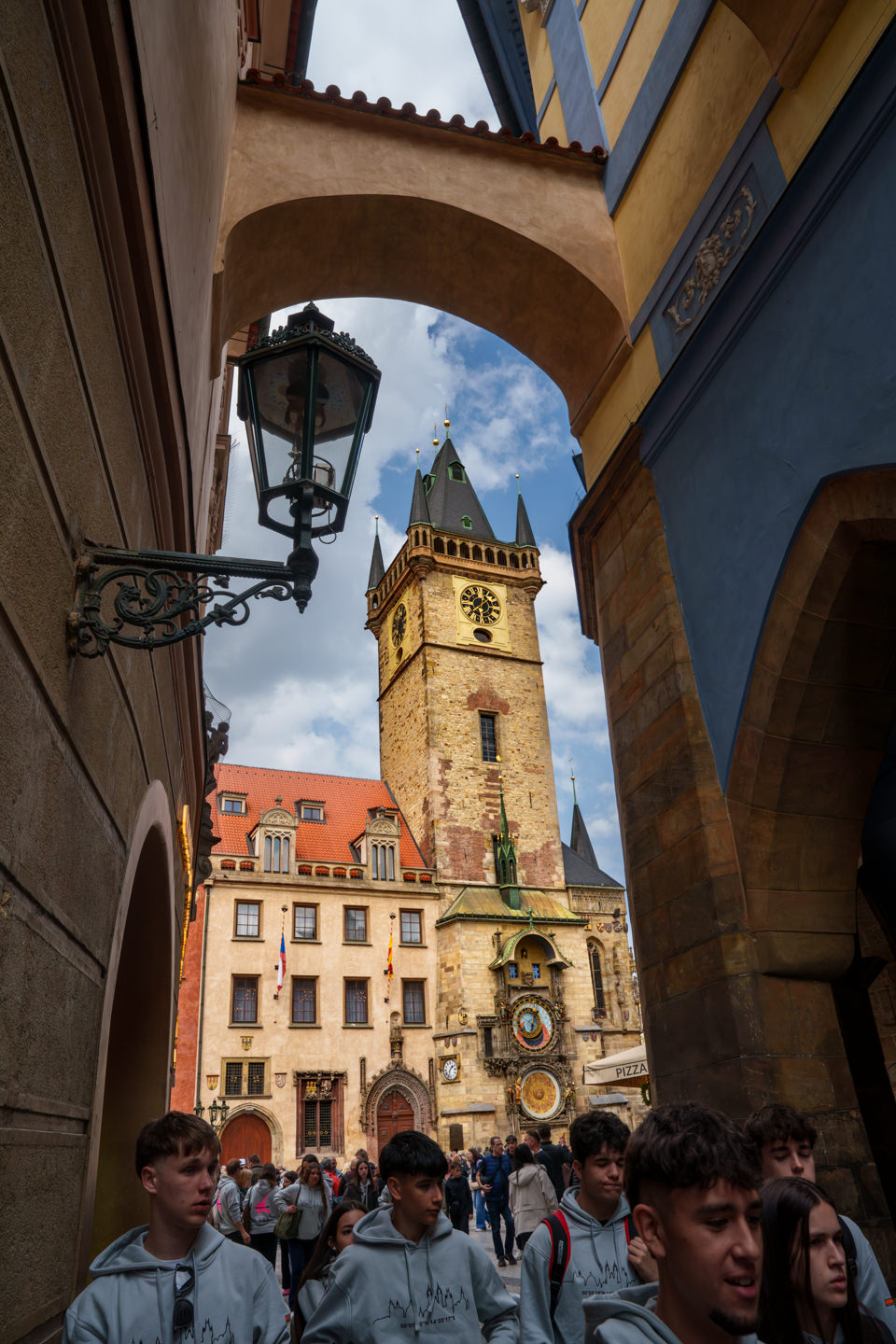
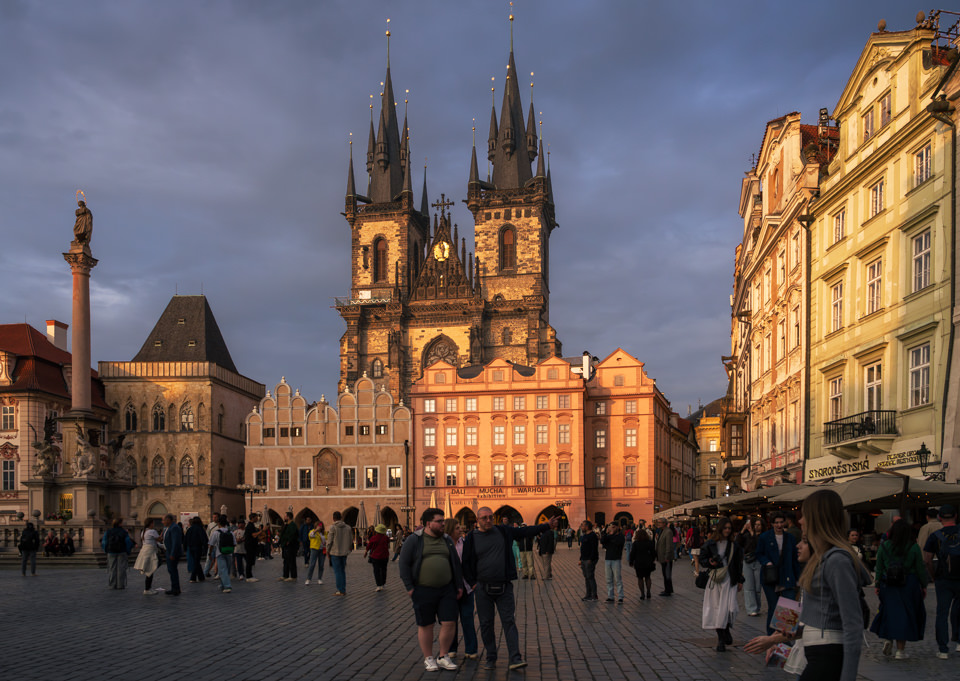
Continuing the journey, we ventured to my favorite of all the European capitals, Prague. I first went there in the mid-1970s, during the Soviet occupation. My teacher and mentor, Walter Susskind, was Czech and regaled me with stories of his childhood and early career. Even though tourists now tend to overcrowd the city during the spring, the beauty of the architecture and the sense of cultural history are remarkable.
The Prague Symphony Orchestra may not be as well-known as the Czech Philharmonic, but it is a prestigious ensemble. The city is blessed to have two incredible concert venues: the Rudolfinum, which houses Dvořák Hall, and the Municipal Building, home to Smetana Hall. My rehearsals and performances took place in the latter.
When we first planned this particular program, and much to my surprise, the administration wanted to include a piece by me. We had played Kinah during my last visit two years ago and this time performed the more recent Schubertiade. The piece calls for a piano to be played offstage, usually positioned near the stage entrance. There wasn’t enough room for the instrument backstage, so it went into one of the large spaces just beyond the right side of the audience. It worked perfectly.
The composition ends very quietly, and normally, I get one extra bow at the end. But here, the audience and orchestra recalled me three times! For perhaps the first time in my life, I felt like a respected composer rather than just another conductor who occasionally writes something.
Originally, I thought that we were going to perform the second of the two violin concertos written by the neglected Czech master Bohuslav Martinů. These days, especially on long trips, I do not want or need to carry the actual scores. I study them at home, either with material I already own or via PDFs that the various orchestras send me in advance. Then, when I arrive, I use the hard copies that are in each orchestra’s library.
Imagine my surprise when the music that showed up on my computer was for the first concerto. (Reminder to self: always check the calendar.) I had never heard, much less studied or conducted, this piece. Written in the 1930s, but not performed until almost fifty years later, it is a real virtuoso workout for the soloist.
In this case, it was the young Czech violinist Josef Špaček, who studied in New York and Philadelphia. With lightning fingers and a bow of steel, he overcame every obstacle and delivered a most convincing interpretation of this rarity. As an encore, rather than a quiet movement of a Bach sonata, he once again dazzled with Ysayë’s Danse rustique from the fifth solo violin sonata. I look forward to working with this fine artist again.
Beethoven’s Eroica closed out the evening. This, at least to me, represents the mountain that every conductor must climb. Revolutionary is not even close to describing this symphony that basically introduced musicians and audiences to the new world of Romanticism.
The orchestra, like all the others so far on the trip, responded with deeply committed playing. There was one unexpected hiccup, though. Usually, a general rehearsal, also known as the dress, is a relaxed play-through of the program, possibly with only highlights of the pieces, depending on the demands of the repertoire. You do not want the musicians to be totally spent.
For us, there was an “open” rehearsal in the morning. I thought there would be around 100 people in the audience. Imagine my surprise when I came onto the stage and saw a full house and the orchestra dressed in all black. No one had told me this was a paid event, though it was a bit less expensive than the evening concert. Essentially, we had to perform as if it were a true concert. The stage crew even removed the chair I use for rehearsals. It all went very well, but we paid a slight price in the evening.
Not that this second event wasn’t good, but it became clear we were getting a bit tired as we approached the end of the slow movement. Only those of us onstage felt this, but presenting the Eroica twice in one day is just a little too much. The following evening went wonderfully, with incredibly responsive playing and a particularly moving fugue in the slow movement.
With five big programs now in the books, I was starting to feel a little overwhelmed. It is not a question of physical tiredness, but the brain can only accommodate so much, even when the repertoire is mostly familiar. A three-day break provided the necessary respite before resuming the concert calendar. If one needs to be in a city to do a lot or nothing at all, Prague is perfect.
 ***
*** ***
***
We spent three weeks on this tour in countries formerly occupied by the Soviets. During that era, one of the few places I never visited was Romania. After the collapse and overthrow of Nicolae Ceaușescu’s government in 1989, the country began to emerge and take its rightful place among already progressive lands such as the Czech Republic and Hungary. I made one visit to Bucharest with the BBC Symphony. This time, I returned to the George Enescu Philharmonic, having conducted this ensemble two years ago.
They play in a very strange auditorium called the Athenaeum. It is among the most ornate concert halls imaginable, with murals, a huge foyer, and Rococo architectural touches throughout. The acoustics are a bit tricky to navigate, and the sound from the podium is quite different from that reaching the audience.
A good example of this dichotomy occurred at the dress rehearsal. We were playing Cindy’s Circuits, a piece that demands considerable virtuosity from the percussion section. After we ran through it, Cindy mentioned that she could not hear the bass drum clearly. From where I was standing, it was too loud! When the composer moved to different parts of the auditorium, the sound seemed to change from one seat to another.
The orchestra really enjoyed learning the work and gave Cindy a rousing ovation. In fact, this occurred even when we began rehearsing, and she was not in attendance. Now I wonder if I should have included a piece by Daniel on this trip, just to complete the Slatkin family composer trifecta.
At first, I was a bit concerned that the ensemble was not really prepared for the Rachmaninov Second Symphony. We had difficulty understanding each other, and I am not referring to the language. Communication between the conductor and the orchestra is impossible to predict, and you never know if the ideas you are presenting are being clearly understood by the players. There were some rough edges in our initial encounter.
The second day, it seemed as if an entirely different orchestra had shown up. So much fell into place naturally, and we were all on the same wavelength. The solo clarinetist was exquisite in the slow movement, and despite the difficult acoustic, we were getting the typical Russian Romantic sound the piece required.
Our soloist was the same one I worked with the last time I was here, Kian Soltani. His vehicle was the Schumann Cello Concerto, not one of my favorite pieces. I used to hear my brother practicing it all the time when we were growing up in Los Angeles. At one point, it was a regular visitor to the world’s concert halls, but these days, it is a bit infrequent. I’ve only conducted it two or three times.
What bothers me about this work? Perhaps I expect more from Schumann. Unlike his piano music or songs, this early Romantic cello concerto contains very little sense of adventure. Yes, the slow movement is lovely, especially with the orchestra’s first cellist having a solo part alongside the protagonist. It is a good showpiece for the soloist, but not in a flashy way. Maybe a little more flamboyance might have been a good idea.
I cannot love everything, but I still maintain a high level of respect for the composer and his effort here. It always sounds like Schumann, and that in itself can qualify the work for a place in the standard canon. Kian played the concerto brilliantly, making one of the best cases for it that I’ve heard.
Spring seems to have arrived, with temperatures a little chilly but sunshine making its presence known. This was a somewhat short trip to Bucharest, only five days, so we did not really have much time to sightsee. Too bad, as I was looking forward to some fearless vampire hunting. I kept a garland of garlic near the bed, just in case.
We did find a couple of outstanding restaurants, both established by Joseph Hadad. He is an Israeli immigrant who has made quite a name for himself, not only as a very accomplished chef but also through his frequent television appearances. I don’t know if he ever watched the series The Bear, but I couldn’t help but keep it in mind. On one of our visits to his restaurant, he was not merely berating his cooking staff but truly yelling at them in full view of the patrons. Maybe it made a difference, as our meal was delicious.
I will report on the remaining two weeks of this long haul in the next edition of this newsletter. I should have some good stories to tell, as my visit to D.C. will include a stop at—well, you know where.
See you next month,
Leonard