The time for taking it easy appears to be over. Conducting and other activities filled up the calendar in October. Sadly, this also marked the end of barbecue season. The cover will adorn my Big Green Egg until March or so.
Musical matters began in New York with a week at the Manhattan School of Music. This annual trip is always enjoyable, as each year brings new students. Programming a concert without knowing the skill set of an ensemble can be tricky, but all the pieces worked well because this crop of young musicians at MSM is excellent.
I had not done any music by Adolphus Hailstork in quite a while and enjoyed revisiting his Epitaph for a Man Who Dreamed. This heartfelt and ultimately celebratory piece is a tribute to Martin Luther King Jr. Hailstork was an MSM graduate and attended our performance.
Britten’s Sinfonia da Requiem balanced nicely with the Hailstork. The pounding, repetitive D naturals of the opening led to a beautiful resolution by the time the piece ended 20-or-so minutes later. The orchestra dug into the work and imbued it with all the color and energy needed.
After intermission, we played more D naturals, diving into Dvořák’s Seventh Symphony. In some ways, this is the composer’s most difficult work in the form. Thankfully, the orchestra was well prepared in advance, and we had plenty of rehearsal time to address its challenges.
For those interested in all things musicological, here is a line you can drop into the conversation at parties: The rhythm Dvořák uses in several moments, when the meter is 6/4 and the main beats fall on one, three, and five, is called a hemiola. But given the composer’s background, shouldn’t it be called a Bohemiola? Just sayin’.
In any event, all went well, and the young musicians of MSM were clearly proud of their accomplishment.
While we were in the Apple, we took in the new Mason Bates opera, The Amazing Adventures of Kavalier & Clay, at the Met. Visually engaging throughout, this is undoubtedly one of the most spectacular productions I have ever seen at any opera house. My jaw dropped more than once just because the technology is used to such stunning effect.
The music was also constantly engaging; however, there were moments when I thought some lines, sung in English, might have been better served by being spoken. This was also my first time seeing and hearing Yannick Nézet-Séguin conduct. He was most impressive, maintaining control over this technically challenging score at all times and exhibiting marvelous understatement with his physicality, never overconducting to get results.
Returning home, I finally had the chance to rehearse and perform in the renovated Powell Hall. The first question I get from almost everyone is, “How does it sound?” Having been to four events in the auditorium this season, I knew it from that perspective. Contrary to what many believe, the podium is not the best place to judge acoustics. The conductor does not know how the audience is perceiving the sound and cannot actually hear everything that is going on.
When we read through Elgar’s monumental First Symphony, the volume seemed louder than it used to, and fast passages got swallowed up by the reverberation. As rehearsals progressed, I got the hang of it and figured out some adjustments with the help of Assistant Conductor Sam Hollister, who was stationed out in the hall.
The program began with the American premiere of my Schubertiade, which was first presented in Hiroshima in January of this year. This pastiche was fun to write and had the desired impact on the listeners. It is among my better efforts as a composer, and I will perform it a few more times this season and next.
My dear friend Emanuel Ax was the soloist in Mozart’s C Major, K. 503. Words cannot adequately describe his impeccable approach to any composer he plays. The SLSO musicians were fantastic collaborators, and we achieved a superb balance between keyboard and orchestra.
Manny got clever on me at the second performance. The first night, he played a Chopin nocturne for an encore. But he had not heard my piece and did not know what it contained. For the next concert, he listened and returned to the stage with the famous Ständchen (Serenade) by Schubert, in the Liszt transcription. I had included a fragment of it in Schubertiade, so it made a nice bookend for the first half.
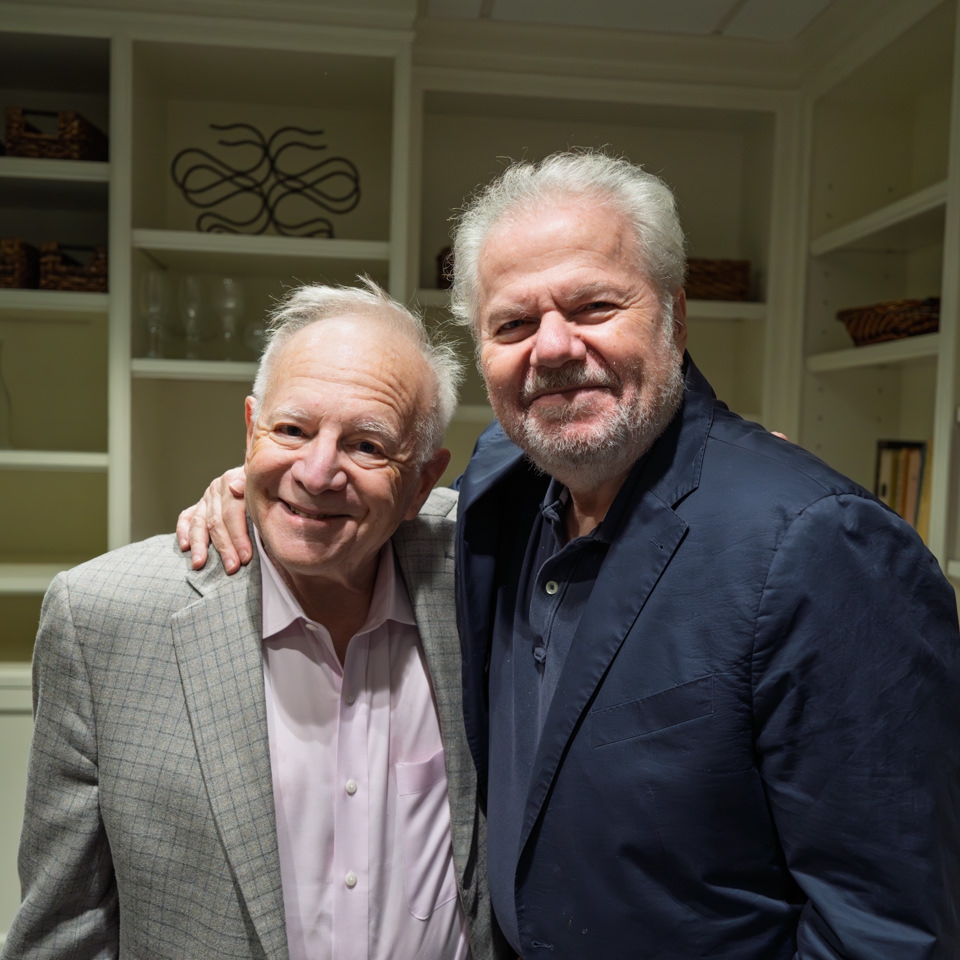
Leonard with Emanuel Ax
It was during this week that the Kennedy Center announced changes to the National Symphony’s offerings that altered its course and direction. Upon Richard Grenell’s directive, every concert must now start with the “Star-Spangled Banner,” a piece usually reserved for special events and season-opening concerts.
During a two-week American Music Festival that I led in DC almost 25 years ago, we played the anthem at the start, after intermission, and as an encore, each time in a different arrangement, for a total of 18 different renditions. But these concerts were designed with a specific format, with the piece making sense musically within the program.
Music directors and artistic administrators work very hard to create concerts that have meaning from start to finish, often developing a program around connections between the pieces. This dictum throws all that away. Is it appropriate to perform the “SSB” before, say, Beethoven’s Missa Solemnis, Mahler’s Ninth Symphony, or Rachmaninov’s Third Piano Concerto? Of course not.
We headed back to the West Coast a few days later, with a visit to the Thornton School of Music at the University of Southern California. The last time I was on the campus was when my son graduated from the Music Industry program. This time, he was in the audience to watch his father take the stage.
When I was 19 years old, I got hired a few times to play viola in the orchestra, performing in Bovard Auditorium. I sat near the oboe section, which included my friend and colleague Michael Tilson Thomas. We all wish him Godspeed on his journey.
My program with the student musicians contained only two works, played without intermission. Schubertiadewas first up, and the orchestra played it with almost as much polish as the older musicians in St. Louis. Our main course was Shostakovich’s Seventh Symphony.
The work is massive in scale, coming in at around 70 minutes. The forces involved include a second full-size brass section that can make quite a racket at times. Every nook and cranny of the stage was taken, and the sight was quite something.
This symphony is a perfect piece for young musicians. It has numerous solo turns, all played here with great aplomb. The various sections, particularly the first violins, must play with equal tone, adjusting for intonation and vibrato, especially in the third movement.
The “Bolero on steroids” of the first movement was handled as well as one would ever want. The woman playing the snare drum started at a whisper and, over the almost ten minutes of buildup, maintained a steady tempo throughout.
Everyone gave their all, and it was clear that the students realized they had achieved something very special. I knew it, too.
Because there were days off between rehearsals, Cindy and I had the opportunity to visit some old haunts from my childhood. Staying downtown meant easy access to one of my favorite eating establishments, Philippe. I always order the same dishes: a French-dipped roast beef sandwich, coleslaw, lemonade, and lemon meringue pie. Yum. We also visited the legendary hot dog stand Pink’s, where I used to hang out after my parents’ recording sessions.
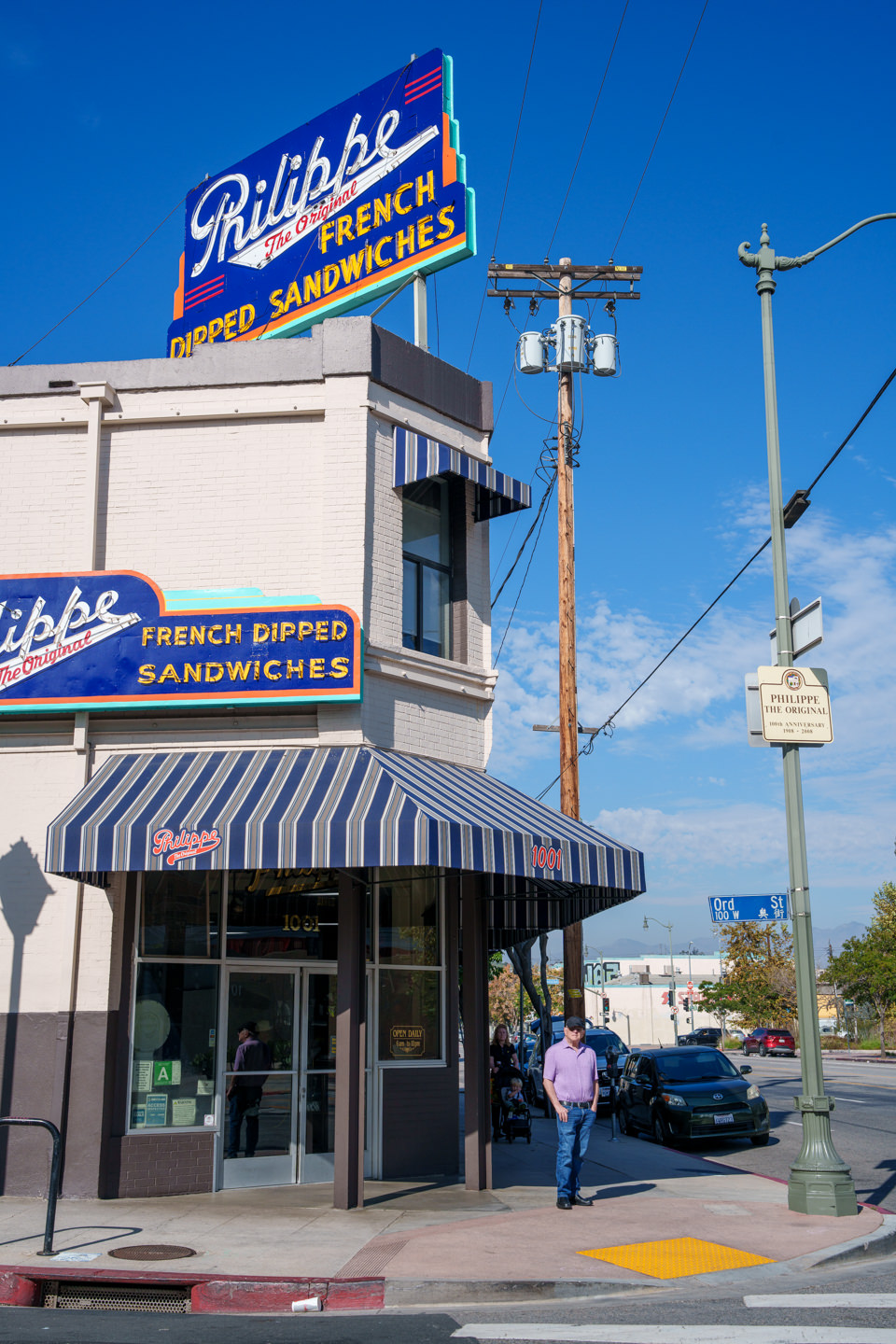
Philippe
***
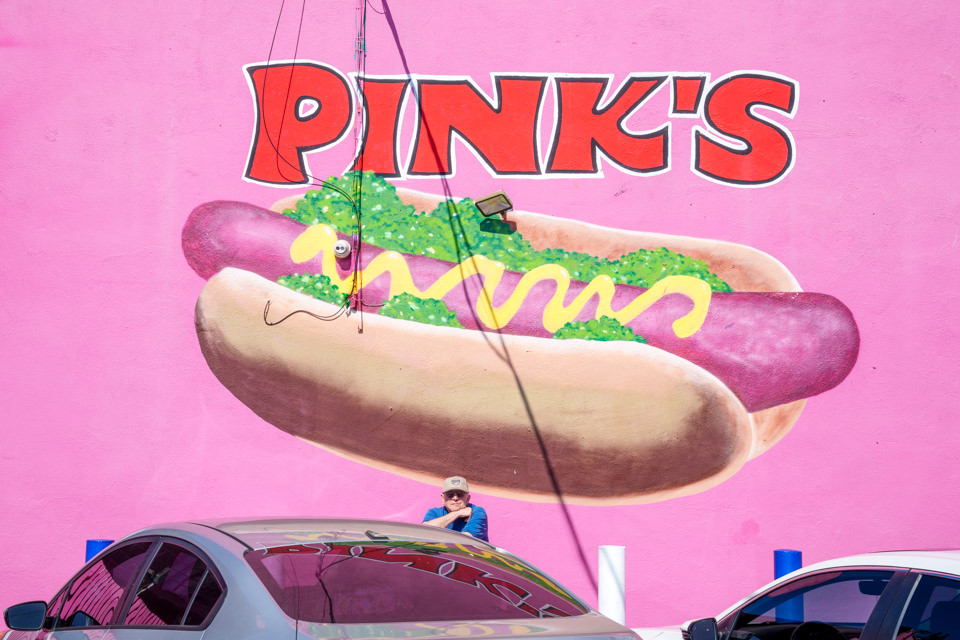
Pink’s
While tracking down material for the documentary being made about me, we decided to visit two of my public schools. First up was John Burroughs Middle School. In my day, it was called Junior High School and comprised grades seven through nine. Some of the buildings are as they were more than 60 years ago. I played both violin and viola in the school orchestra. The librarian allowed me to peruse the yearbooks, which include several poor-quality pictures.
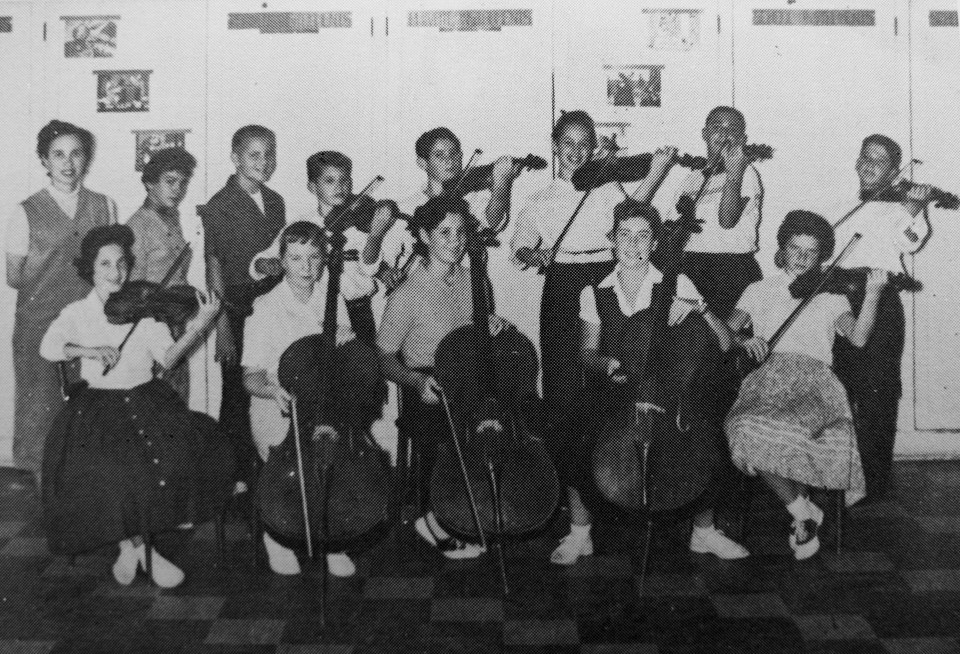
John Burroughs Junior High String Ensembe (Leonard top row third from left)
We also went to Los Angeles High School, where I was a student from 1960 to ’62. This was possibly the happiest time of my life, as LA in those years seemed immune to the world’s troubles. Today, there is tension in the air. Fears of intimidation and even arrest from ICE hover, and officers have been known to appear at what should be a haven.
The band director, Patrick Hoff, invited me to speak to his band class. They meet in the same space where I rehearsed all those years ago. What a fantastic bunch of kids. There is no longer an orchestra or chorus at the school, but at least these young musicians have the chance to show their skills on and off the football field.
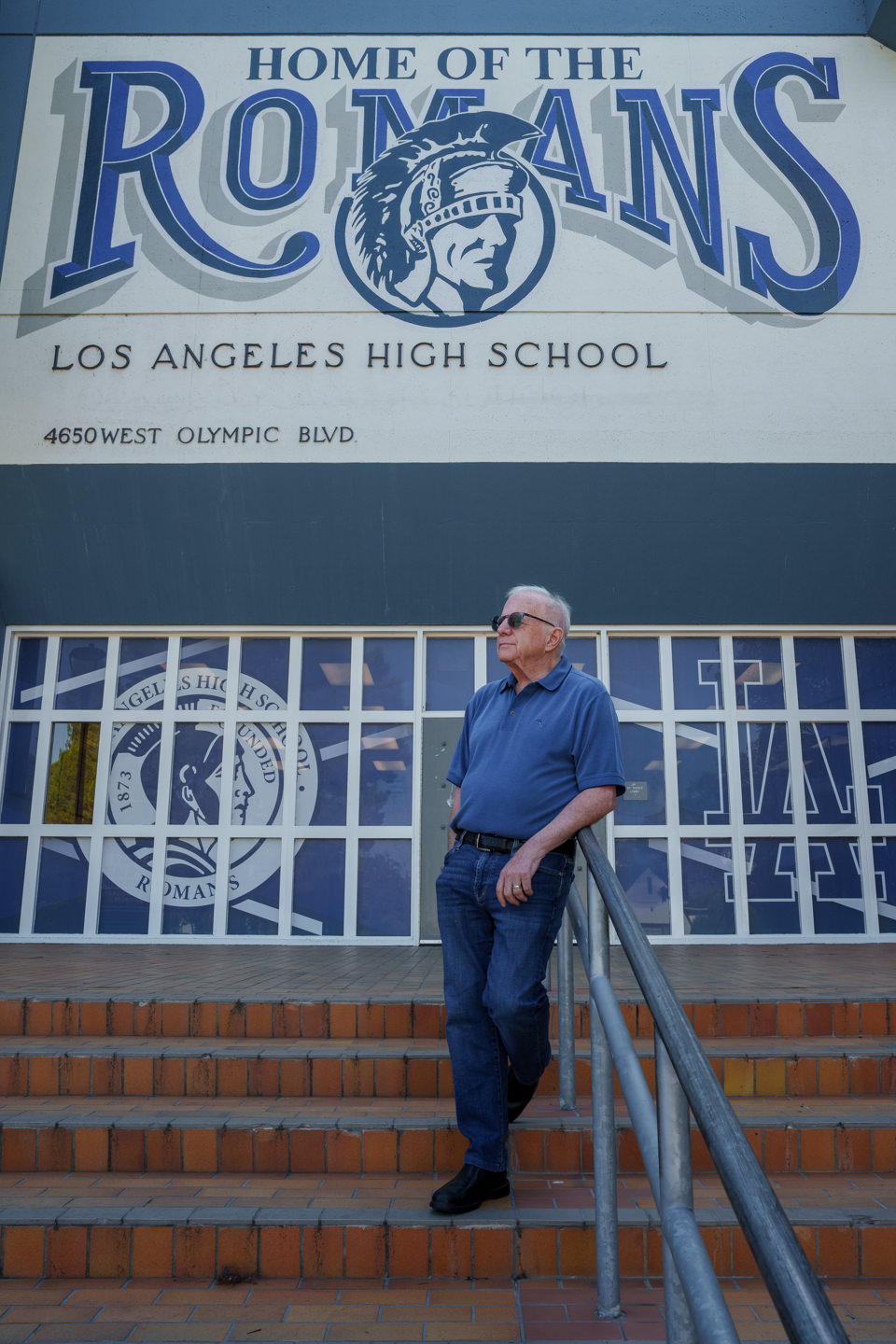
Leonard at LA High School
I also reconnected with my longtime friend and colleague Glenn Dicterow and his wife, Karen Dreyfus. Over a delicious Italian meal, we exchanged stories of life as it was and as it is. Glenn’s father was the principal second violinist of the Los Angeles Philharmonic for more than 50 years. When his son became concertmaster of the same orchestra and later the New York Philharmonic, we worried that Glenn’s head would become quite large. It has not, and he remains the gold standard for leadership in that position.
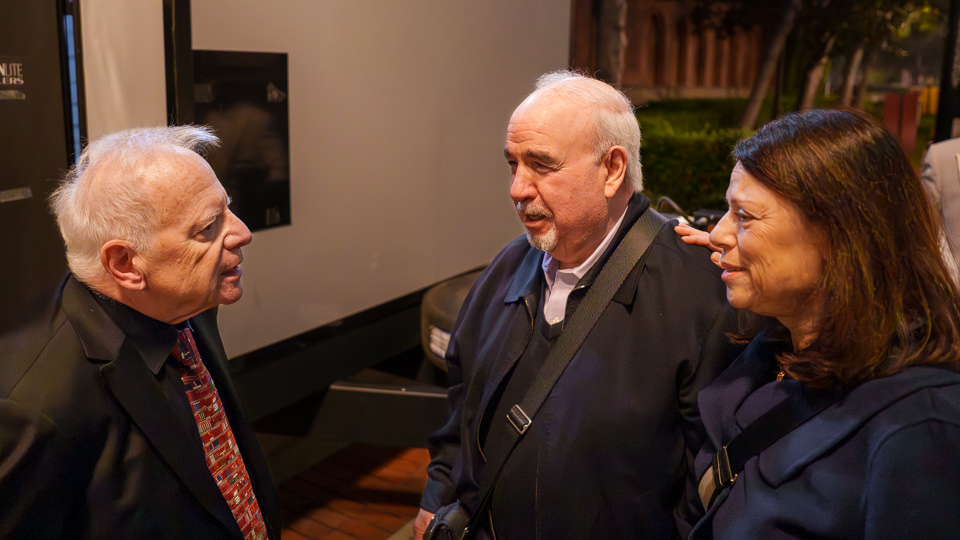
Leonard with Glenn Dicterow and Karen Dreyfus
The final stop of the month was Las Vegas, but since that concert will not take place until November, I will fill you in next month.
See you then,
Leonard