If variety is the spice of life, then I am certainly enjoying some very pungent meals.
September turned out to be one of those months in which it was not possible to compare one set of events with another. And just when I thought that all the 80th birthday celebrations were over, there was one last hurrah.
As regular readers of this site know, I have been working with composer Jeff Beal for several years, sometimes in his guise as a film and television composer and other times in the concert world. For three days of extremely intense rehearsals, concerts, and recordings, we found ourselves in Culver City and Santa Monica with the Los Angeles Chamber Orchestra.
The music included ten of Jeff’s New York Etudes, originally for solo piano and now fleshed out with strings. He has written 20 altogether, and those we selected filled the first half of a concert nicely.
With Jeff playing keyboard—his primary instrument is the trumpet—this mostly serene and reflective music struck a lovely tone. The etudes are not particularly difficult for the orchestra, but the piano plays nonstop for about 45 minutes.
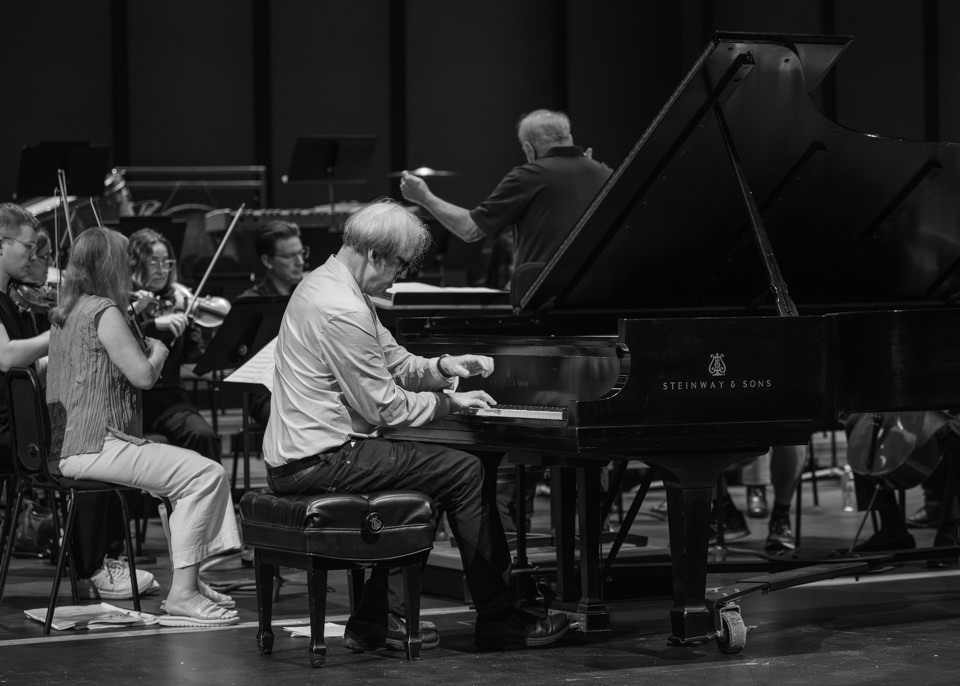
Everything went smoothly on the fine, old sound stage at Sony Studios. We somehow managed to record all the etudes in two hours, which is a lot of music within that timeframe but nothing compared to the challenge of recording the larger orchestral pieces.
Jeff’s Body in Motion, a violin concerto that I premiered in January 2024, was next on the docket. This piece features Kelly Hall-Tompkins, who has played the work several times now, including in previous performances with the LACO. She was phenomenal, as was the orchestra.
We also had to rehearse and record a brand-new piece that celebrated my birthday of a year ago. Four Score is written in three movements, each a sort of portrait of different sides of my personality. Originally, the premiere was supposed to occur a bit later in the season, but when the opportunity arose to record the piece, we decided to program it earlier than expected.
The orchestra commanded the work right away and was spot-on for the performance and recording session. All in all, we put down almost 90 minutes of music in just four-and-a-half hours of actual recording time. I believe this was the most material I ever recorded in such a short time span. I do not yet know when the music will be released, but keep following this site, and I will keep you posted.
Somehow, I managed to find some time for dinner with my dear friend James Conlon. What a remarkable musician and human. His work bringing to light so many pieces by banned composers has been a godsend. And of course, his career speaks for itself.
While Cindy returned to St. Louis, I headed to Nashville, where I had my first meetings as the orchestra’s artistic advisor. I filled this role for them 20 years ago when they were looking for a new music director, and now it is time to help out again. Music City is a vital and thriving community, with many new businesses and franchises moving there. This creates opportunity in the arts sector, and I hope I can be of use.
So many people do not really know much about their orchestra, and this needs to change. Hopefully, we come up with a plan for what today is called “branding,” making stars out of the musicians in the orchestra. I get to oversee the programming for the 20th anniversary of the hall as well as the 80th anniversary of the ensemble. It will be a big job, but as long as I am still able to think creatively, there are so many possibilities.
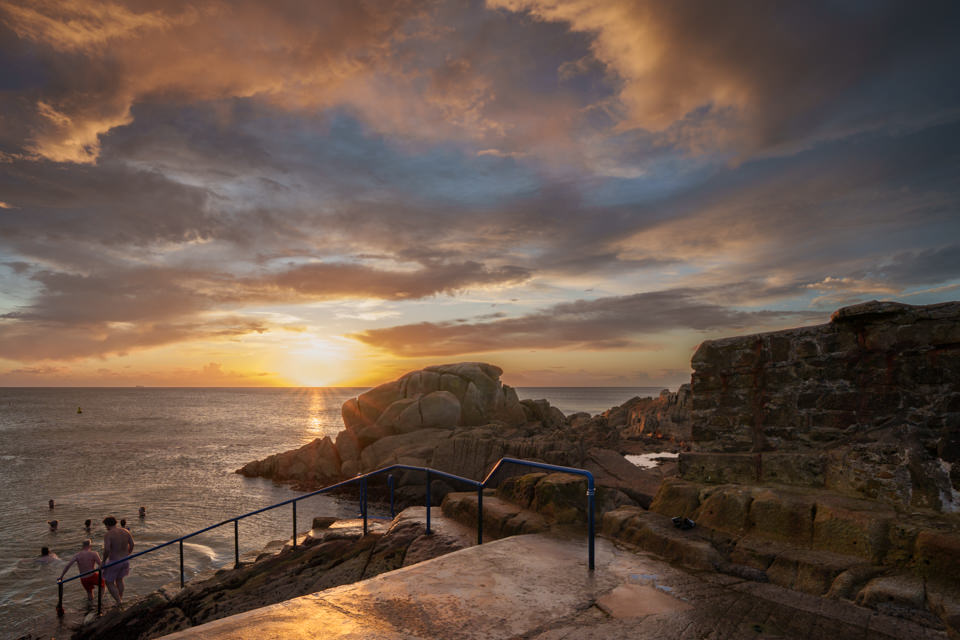
Next, I was off to what is now a regular stop on my conducting itinerary, Dublin. This time, I was opening the season of the National Symphony Orchestra Ireland, formerly the RTÉ. It is always a pleasure to work with them, and we seem to have a great rapport.
The program opened with Cindy’s Timepiece, and I think it may have been the best performance I have given of the work—nice and spritely with fantastic percussion nuances. Cindy accepted the generous applause of both audience and orchestra.
The soloist was the French pianist David Fray. We had not worked together before, and although he was suffering from a bad cold, his way with the D-minor Mozart Concerto was marvelous, with a singing legato, fluid technique, and fine control of dynamics. This young artist bears watching. Not so well-known in the States yet, he could be an interesting choice for those orchestras looking for an excellent musician and lovely person.
The final work on the program was the gargantuan Strauss tone poem Ein Heldenleben. It had been quite a few years since I last conducted it, but since I knew from my youth orchestra days, relearning it presented no problems. There are those who think it is way too indulgent for someone to present their own life via a musical composition, but is that different than an author writing an autobiography?
With violinist Elaine Clark acting as Frau Strauss, playing the fiendishly difficult solos with the greatest of character, the work proceeded through the six stages of the composer’s life. Forceful where necessary and soulful in the wonderful lyric passages, the orchestra gave a fine performance to kick off a new season of music making.
***

With a few days off, we headed to London, where I had not been for many years. At one time, this was a regular stop for me, with concerts and recordings galore. Cindy and I took in a play, went to a London Symphony Orchestra concert conducted by Antonio Pappano, and saw Penn and Teller at the Palladium. Such is the vibrant cultural life of the city that every performance was sold out. How refreshing to see the arts valued with no interference from political forces.
We returned home to the news of yet another casualty of suppression, Jimmy Kimmel. Make no mistake. The first rule of autocracy is to control the media. How we react, and perhaps more importantly act, is of utmost importance right now. Of course, we must condemn violence, political or otherwise. But we also must hold people responsible. Putting out information that has yet to be proven is not only incorrect but also harmful.
As I have written before, the arts, and I mean all of them, should be a safe space for expression. If someone does not like what we say or how we perform, they are perfectly welcome to stay away from what we do. Let us be. Let us grow.
There was much excitement in midtown St. Louis about the long-anticipated reopening of Powell Hall. After two years of being displaced in various venues, the orchestra returned to their beloved hall, now with striking new features. An entire wing was added on for rehearsal, education, and staff space, giving everyone the opportunity to feel the renewed energy surrounding the orchestra and its role in the community.
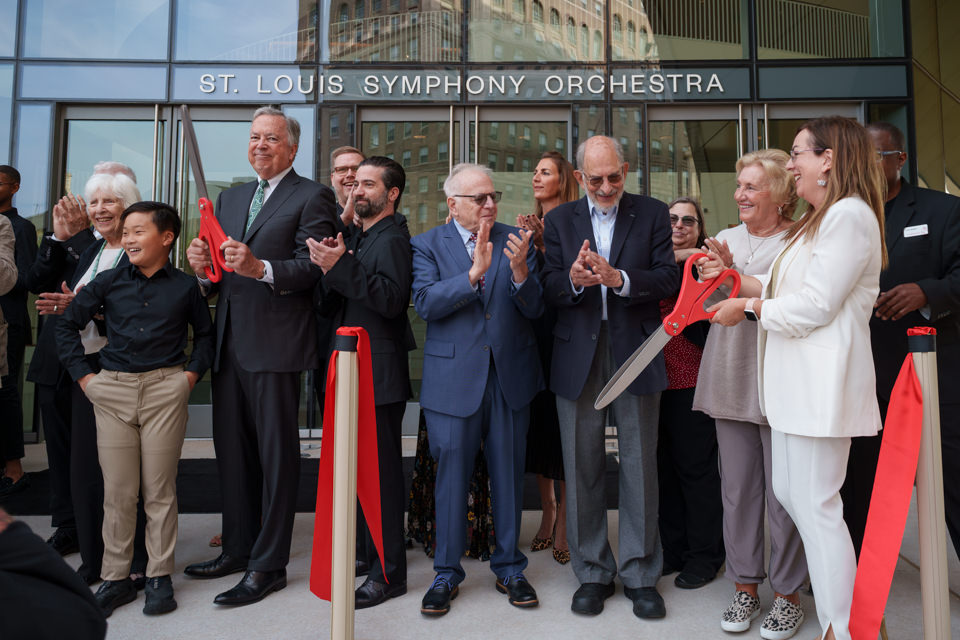
The enthusiasm of the ribbon-cutting ceremony carried over for a performance of varying repertoire. The question on my mind was how the renovation would affect the acoustics. The house now contains about 400 fewer seats, although the basic structure remained intact. I noticed more presence to the sound but still a significant reverberation time.
The real test came with the first subscription concerts of the season. With three fanfares and the world premiere of a piece by St. Louisan Kevin Puts, Stéphane Denève took a bold step into the new Powell Hall. Full houses greeted the orchestra, and they responded with gusto.
They saved the true orchestral tour de force for last, performing the very same Ein Heldenleben that I had conducted earlier in the month. With warm and luscious playing, the musicians were clearly getting the hang of the new digs, and I could compare and contrast the sound of the old Powell Hall with its upgraded successor. I am really looking forward to conducting there in a couple weeks.
At that time, I can give you a view from the podium.
See you next month,
Leonard