From Transylvania to Pasadena—those are words I never expected to write, but they represent two of the very interesting visits that occupied the past month. The former region is not the one associated with vampires, which, as far as I know, do not inhabit the mountains of North Carolina.
Let’s start with what turned out to be a surprisingly wonderful experience at the Brevard Music Festival. I had always heard of it but knew very little of its history. Its origins date back to 1936 with the founding of a summer music camp, and the annual festival began ten years later. That places it among the oldest of festivals in the United States.
The obvious comparisons are to Aspen, Tanglewood, and others that utilize a combination of seasoned professional musicians who work alongside students. These festivals are also major tourist destinations due to their scenic locations. It was a little complicated to get to Brevard from St. Louis. We had to stop in Charlotte, change planes, fly to Asheville, and then drive for about 45 minutes to arrive at one of the greenest-looking areas of the country.
The Brevard Music Center’s orchestra program includes multiple ensembles based on experience and age. The faculty members sit not only in the principal chairs but also within the orchestral ranks. This is quite unusual and very helpful, as they can offer advice to those within a given section seated nearby.
The first rehearsal revealed a group of musicians who certainly knew their parts. The reading of the New World Symphony was already quite polished, with everyone seemingly eager to make new discoveries in this oft-played work. The younger members were getting some of the best leadership possible from musicians in the Cincinnati, Atlanta, and Dallas symphony orchestras, among others.
The campus boasts several performance facilities as well as ample rehearsal spaces. You can always hear instrumentalists practicing among the Carolina pines. The locals welcome visitors with open arms, and they fill the houses at every concert. The town of Brevard is very proud of its annual music festival, and not just because of the financial gains to their community.
Cindy was one of the featured composers, and the faculty presented a chamber performance of her piece Stepping Out for flute and percussion. With the orchestra, we performed her Double Play as the opener. The concert featured terrific solo playing from all concerned, with delightful energy and enthusiasm for the jazzy second part. The soloist on our program was Stella Chen, who dove into the Barber Violin Concerto with great abandon. It has been fascinating to see this piece enter the standard repertoire. When I began my conducting career, only a handful of musicians played it. Now, you see it pop up with great frequency, almost once every three seasons in any orchestra’s calendar.
The Dvořák proceeded excellently, with a particularly fine rendition of the slow movement. After a very enthusiastic response from the audience, we offered my father’s Carmen’s Hoedown as an encore. At one point, I usually ask a member of the orchestra to let out a good ol’ “yee-haw,” and the musician who did the honors was among the very best I have ever heard.
All in all, this is certainly a festival worth everyone’s attention. The area is lovely—perhaps a bit hot and humid at times, but the marvelous performances and beautiful scenery make up for that. Kudos to Keith Lockhart and Ken Lam for keeping the rehearsal and performance levels at such a high standard.
Oh, about that Transylvania part. It is the county seat where Brevard is located. I learned that the name comes from the Latin, with “trans” meaning across and “sylva” standing for woods. In other words, “across the woods.” But keep in mind that one of the only ways to kill Dracula is with a wooden stake. Maybe those strange sounds that woke me up in the middle of the night were not bears. I always keep a wreath of garlic around my neck when I sleep, just in case.
In what turned out to be one of the most historically memorable visits for me, Cindy and I headed to Los Angeles. As most of you regular readers know, my parents were one half of the legendary Hollywood String Quartet. Well, 25 years ago, a group of four musicians formed the New Hollywood String Quartet. To honor this anniversary, they decided to do a four-concert series playing works that the original group had recorded.
I was asked to be the host for each of the programs. Having written extensively about my family, I thought that I had all the information needed to give decent presentations. But along the way, memories, long repressed, kept creeping into my psyche. Often, I found myself “seeing” people, places, and music that had been forgotten or lost.
As the days progressed, more and more of these reminders became evident. The true turning point came from a slightly different source: a documentary feature being made about me and my family. It will be titled, Don’t Call Me Maestro. The producer, Miran Halen, thought it would be useful to do some filming while I was out on the West Coast. Some of what she wanted to capture had been included in a TV program about Korngold that I did in 2003, but the BBC is a bit stingy when it comes to granting the rights to use that material.
It became important to revisit some of the places from my childhood and reminisce about them along the way. I suggested that we do the current mode of conversations in cars, having my son as the driver and me the passenger. We would simply talk about the old days, as well as the new, and I would describe various places of importance as we traversed parts of LA.
Our first stop was the Hollywood Bowl, specifically the museum located on the grounds. In a couple of weeks, we would be playing Daniel’s Voyager 130, marking the fourth generation of my family to appear at the historic amphitheater. I had read that my grandfather’s first cousin on my mom’s side, Modest Altschuler, was among the initial conductors to lead an orchestra at the Bowl, but I had never seen proof of this.
The wonderful archivists at the museum provided not only the history but also the actual program book from 1922, when my granduncle led Stravinsky’s early E-Flat Symphony, a work best left on the shelf. There were also sketches of Modest, so I now had what I needed, and Miran had a new avenue to explore for the documentary.
But the heart-stopping moment—considering that I have had two major surgeries in that area, perhaps I should not use that phrase—was when I was shown some eight-millimeter footage from a performance in 1958. The camera was unsteady, and the shots were from far away, but sure enough, and for the first time, I saw film of my dad conducting. You cannot imagine what went through my mind and body.
It turned out that this 10-minute soundless video came from a program of Viennese music, complete with a soprano soloist and dancers. Originally, it was supposed to be Elisabeth Schwarzkopf, but she cancelled and was replaced by one Eva Likova. All this and other material will be provided for inclusion in the documentary, which will probably not be completed for about a year and a half.
Continuing on the tour, we stopped by the house where I spent my formative years. The owner is one Sharona Alperin and, indeed, she is the Sharona immortalized in the song by the Knack. A real estate agent, she is a lovely and hospitable woman who has lived in the home for quite a while. We toured the place, and I pointed out all the spots where the famous musicians regularly came to visit and work. Her children were there and were stunned to hear that Frank Sinatra would sing my brother Freddie and I to sleep in the very bedrooms that they occupied.
Again, the memories came flooding back, and I realized how fortunate I was to have such an incredible childhood. That extended to the public schools I attended, all in walking distance from the house. We visited all three, and today, they are almost like armed camps. Signs about guns, warnings about ICE, and security guards are all over, even at a time of year when school is not in session. It is so very different from the days of yore.
Meanwhile, I was doing triple duty at the quartet performances. I spoke before each half, trying to outline the history of the original Hollywood String Quartet as well as give an overview of what it was like back in the ’50s. Some people in the audience knew my parents and told me stories about them that I had never heard. Others said that I had made an impact on their lives, which is always so gratifying to hear.
I was also able to sneak into the audience and listen to the new version of the group. Of course, they do not play in the same style as the one from generations ago, but they are wonderful and gave their all during these four days. With a range of repertoire by Schubert, Schumann, Brahms, Schoenberg, Walton, and Turina, this festival was a massive undertaking. The audiences were enthusiastic, and the result was heartwarming.
I also got to do something that I adore: page turning during three works with piano. Someone had to do this supposedly thankless job, and I love it. Participating as neither a performer nor audience member is endlessly entertaining. Most people think there is a lot of pressure involved. You have to turn at just the right moment for the pianist to remember what is at the end of a page and coming up on the next one. You have to do it quickly. Repeats are problematic.
Jean-Yves Thibaudet was one of the pianists, and we had a great time, with his infectious laugh coming into play once in a while during the performance. There is a lot to remember in the Franck Quintet. Full disclosure: I muffed one of the turns in the Schumann Quintet. Perhaps it is as hard to do as they say.
All in all, this was a memorable four days and an experience that I will always treasure.
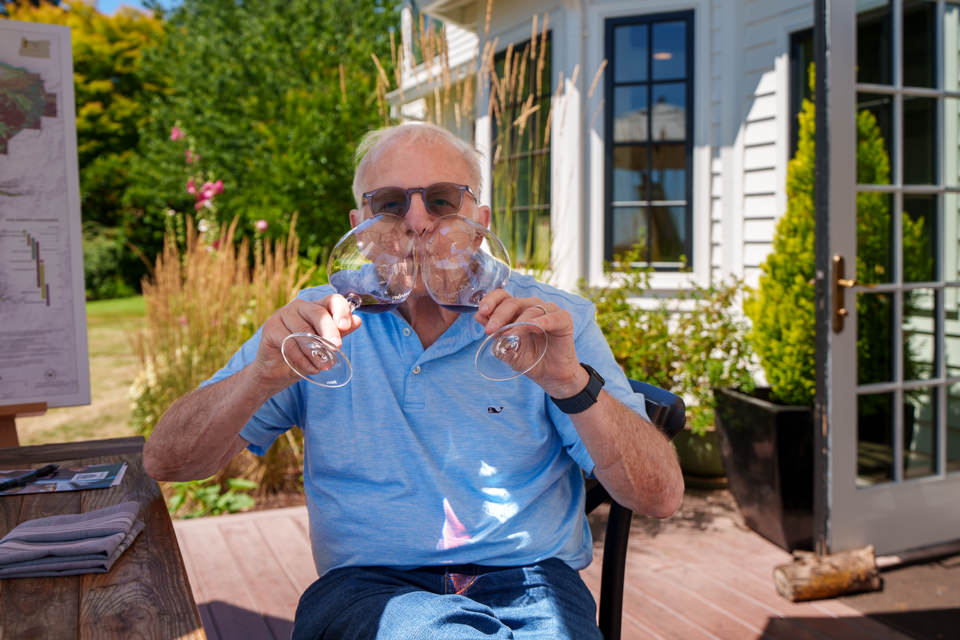
Cindy and I had a week and a half off, so we traveled up to Oregon, visiting the coast and exploring the Willamette Valley. As usual, her photos tell the story much better than I can.
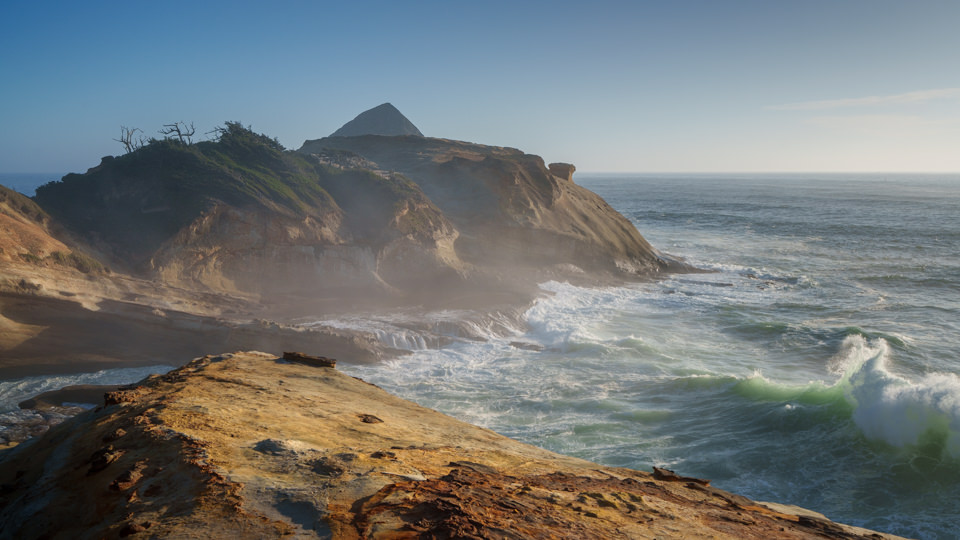
***
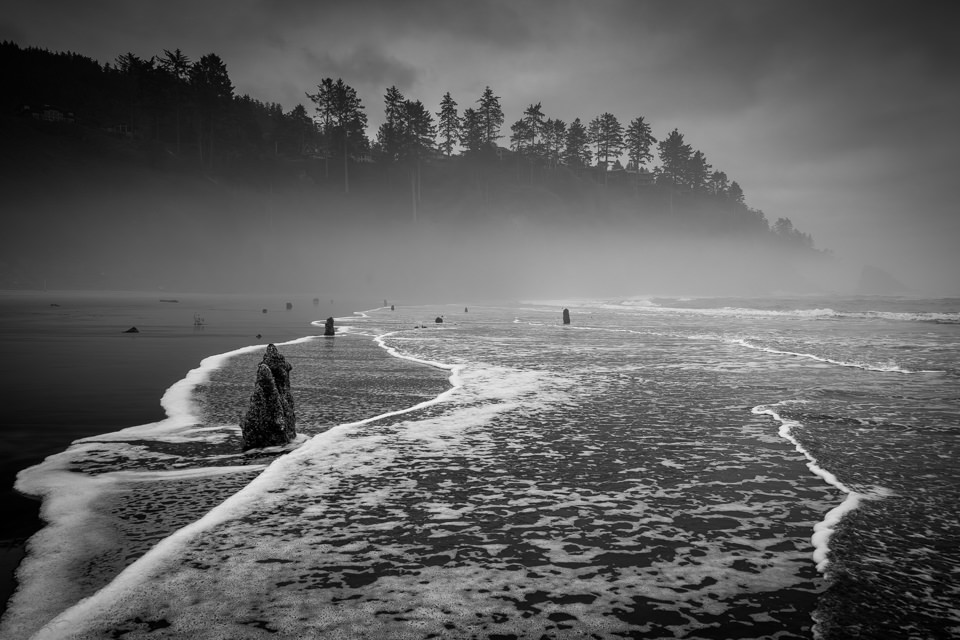
***
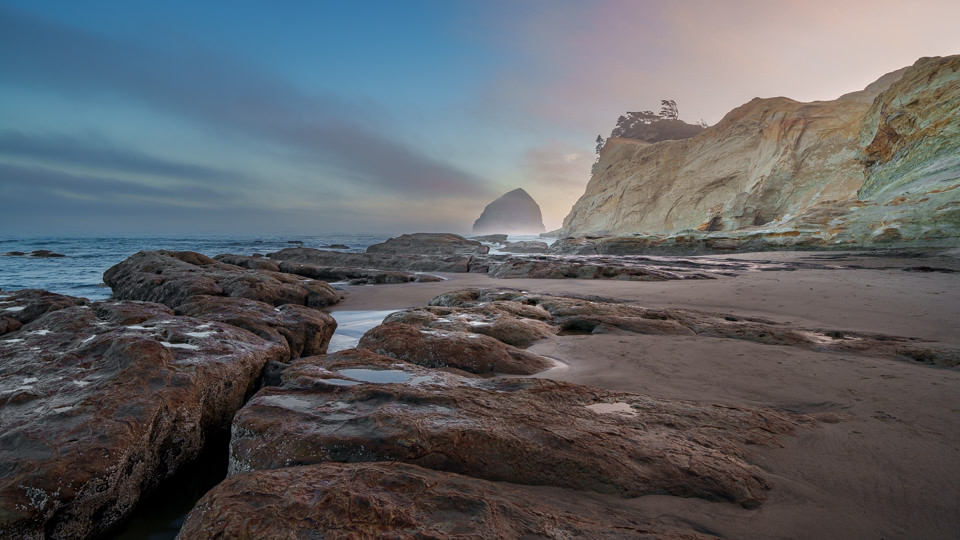
***
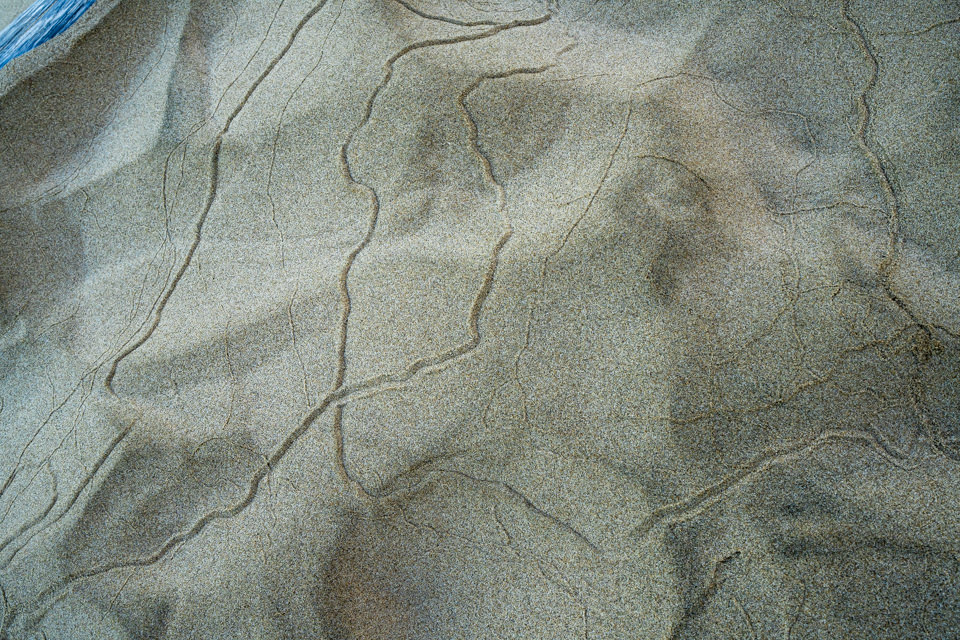
***

***
Then, we headed back to LA for what would be, more or less, the highlight of my 80th birthday celebration. Having conducted at the Hollywood Bowl more than 50 times, and having attended concerts there since I was eight, I always welcome the opportunity to return to this iconic venue. This time, we added the fourth generation of my family to the list of people who have appeared on that hallowed stage. Starting with Modest Altschuler, and continuing with my parents, and then me, it was now the moment for my son.
We played his Voyager 130, a perfect piece for the Bowl. The audience cheered as Daniel made his way to the center of the stage and then, when he returned to his seat, they let out another roar. It was all beyond moving. The Philharmonic gave it their cinematic and concert best, making the strongest case possible for the success of this marvelous piece.
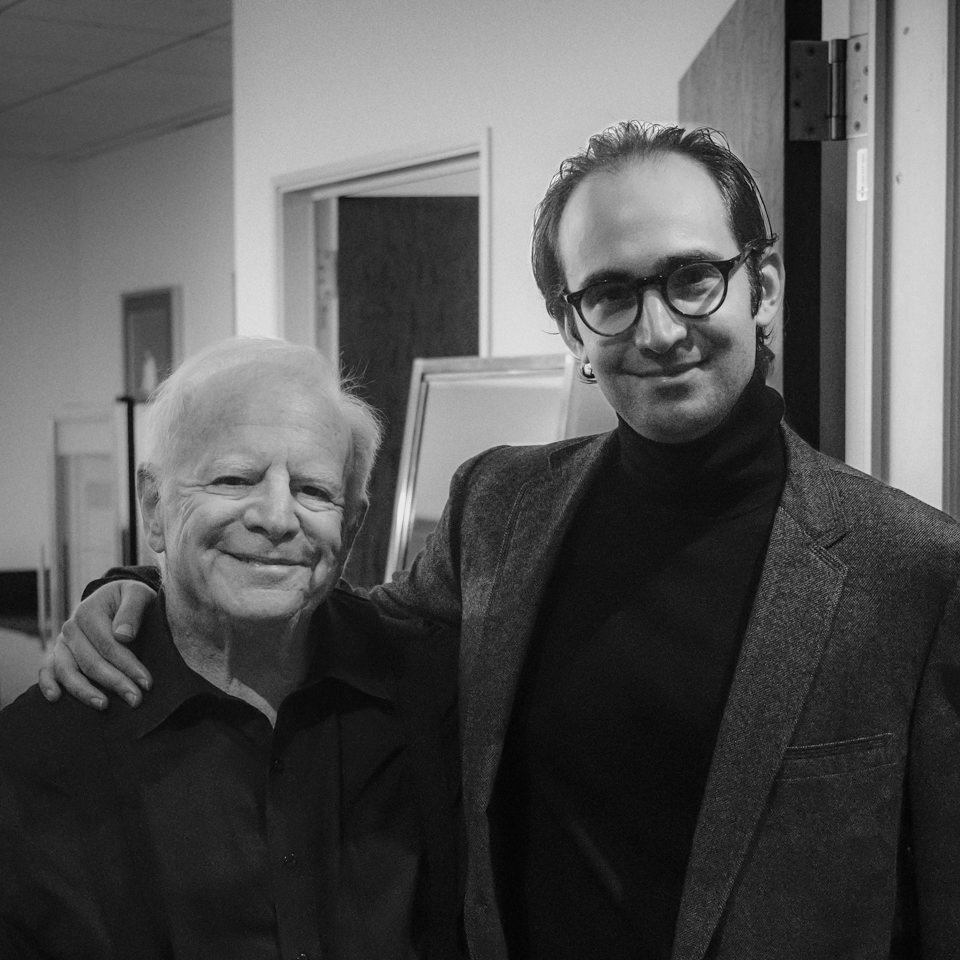
photo by Andrew Barrack
The longest-serving concertmaster of the orchestra, Martin Chalifour, was the soloist in Vaughan Williams’s The Lark Ascending. He brought his luxuriant tone and impeccable intonation to a piece that made a surprisingly fine impression in a venue more noted for large-scale works. I was honored to conduct his final solo appearance with the orchestra before he retires at the end of the summer.
It was probably Holst’s Planets that brought out almost 13,000 people on a Thursday night. This is a huge crowd for a weekday, and they seemed to have a great time, whooping it up after some of the noisier movements and mostly keeping the sound of rolling wine bottles to a minimum. With just one rehearsal to put this program together, the Phil brought it all off with panache and style.
Most of August will be devoted to working on the score-study books I am writing. Publication dates are to be announced. At the end of the month, I will head to Boonville, Missouri. You will have to wait until next month to discover why.
See you then,
Leonard